
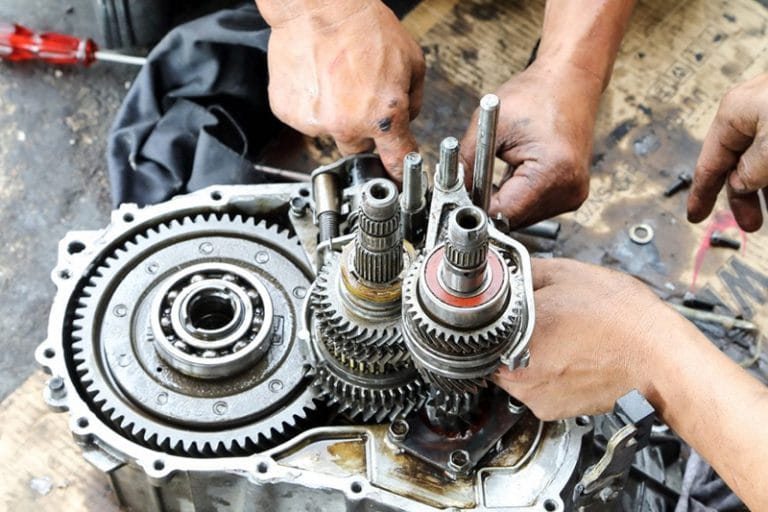
Here’s a number that might make you wince: the average transmission replacement costs between $4,000 and $7,000. And that’s before labor. We’ve seen drivers face this exact scenario, sometimes because of a manufacturing defect, sure, but more often because regular maintenance got pushed to the back burner.
The truth is, your transmission is one of the hardest-working components in your vehicle. It’s also one of the most expensive to repair or replace when things go wrong. But here’s the good news: with proper care and attention, most transmission problems are entirely preventable. At Key Transmission & Gears in Englewood, Colorado, we’ve spent years helping drivers across the Denver metro area avoid costly repairs through smart, proactive maintenance.
In this guide, we’ll break down exactly how transmission maintenance saves you thousands over the life of your vehicle, and what you need to know to keep your car, truck, or SUV running smoothly for years to come.
Understanding Your Vehicle’s Transmission
Think of your transmission as the translator between your engine and your wheels. Your engine generates power, but that power needs to be converted and delivered to your wheels at the right speed and torque. That’s where the transmission comes in.
Whether you drive a manual or automatic, your transmission contains dozens of precision-engineered components working in harmony. In a manual transmission, you’ve got the clutch, clutch plate, flywheel, synchronizer assembly, and more. Automatics rely on torque converters, planetary gear sets, and complex hydraulic systems. Both types also connect to differentials, CV joints, axles, transfer cases, and driveshafts.
All these parts operate under extreme heat and friction. Transmission fluid serves as both lubricant and coolant, keeping everything running smoothly. But over time, that fluid breaks down. Metal shavings accumulate. Seals wear. And without regular maintenance, small issues snowball into major failures.
Here’s what many drivers don’t realize: your transmission is a closed system. It should never leak fluid under normal conditions. When it does, or when the fluid degrades, problems follow fast. The system wasn’t designed to operate with compromised lubrication, and it won’t tolerate it for long.
Understanding this basic principle is the first step toward protecting your investment. Your transmission isn’t something you can ignore until it fails. By the time you notice obvious symptoms, significant damage may have already occurred.
The True Cost of Transmission Neglect
Let’s talk real numbers. A routine transmission fluid change typically costs somewhere between 0 and 0, depending on your vehicle and location. A complete transmission flush might run 0 to 0. Compare that to transmission repairs, which can easily hit ,500 to ,500, or a full replacement pushing past ,000.
But the financial hit doesn’t stop at repair bills. There’s the inconvenience of being without your vehicle for days (sometimes weeks), potential towing costs, and the ripple effect on your daily life. Miss work, scramble for rental cars, rearrange your schedule around shop hours. It adds up quickly.
We’ve seen it happen too many times. A driver notices something feels “off” but figures they’ll deal with it later. Months pass. Then one day, the transmission slips hard or refuses to engage entirely. What could have been a $200 service visit becomes a $4,000 rebuild.
The math is simple: spend a little on prevention, or spend a lot on correction.
Common Signs of Transmission Problems
Catching issues early is crucial. Here are the warning signs we tell every customer to watch for:
Lack of response – If you shift from park to drive and there’s a lag before your vehicle moves, pay attention. High engine revving without corresponding movement is a red flag.
Grinding or unusual noises – Whether you’re actively shifting or cruising at steady speed, grinding, scraping, or whining sounds shouldn’t be ignored. New noises almost always mean something.
Gears changing unnecessarily – In an automatic, unexpected gear changes on flat roads or at constant speeds indicate trouble in the system.
Loud or rough gear changes – Clunking, thudding, jerking, or intense vibrations during shifts suggest your transmission is struggling. Poor acceleration often accompanies these symptoms.
Transmission fluid leaks – Remember, your transmission is a closed system. Transmission fluid is typically red, making it easy to spot on your driveway or garage floor. Any leak warrants immediate attention.
Burning smell – Overheated transmission fluid has a distinct burnt odor. If you notice it, your transmission is running too hot.
For manual transmission drivers, clutch-related symptoms deserve equal attention: grinding when shifting, difficulty staying in gear, declining gas mileage, or a clutch pedal that feels loose, spongy, or vibrates. If you’re pressing harder to engage the clutch or struggling on hills more than usual, something’s wrong.
If you notice any of these issues, don’t wait. At Key Transmission & Gears, we offer free electronic diagnostics and road testing to pinpoint exactly what’s happening. The sooner we catch a problem, the less it costs to fix.
Essential Transmission Maintenance Tasks
Transmission maintenance isn’t complicated, but it does require consistency. There are several core services that keep your transmission healthy, and they’re all far cheaper than repairs.
Fluid Changes and Inspections
Transmission fluid is the lifeblood of your system. It lubricates moving parts, cools components, and facilitates smooth gear changes. Over time, it degrades from heat exposure and contamination.
Fresh transmission fluid is typically bright red and translucent. As it ages, it darkens and may develop a burnt smell. When fluid breaks down, it loses its protective properties, leading to increased friction, heat buildup, and accelerated wear on internal components.
Regular fluid changes involve draining the old fluid from the pan, replacing the pan gasket, adding fresh fluid, and replacing the filter. It’s also the perfect opportunity to inspect the pan for metal shavings or debris, which can indicate internal wear.
We recommend periodic inspections even between scheduled services. Topping off fluids and checking for leaks takes minimal time but provides valuable peace of mind. Our technicians will examine all accessible components and alert you to any developing concerns.
Filter Replacement and System Flushes
Your transmission filter catches contaminants before they can damage internal components. Like any filter, it eventually clogs and needs replacement. A dirty filter restricts fluid flow, causing the transmission to work harder and run hotter.
Filter replacement typically happens during fluid changes. But, some vehicles have sealed transmissions where filter access is more limited, your owner’s manual or a knowledgeable technician can advise on your specific situation.
A transmission flush goes beyond a standard fluid change. While a drain-and-fill replaces roughly 50-70% of the fluid (some remains in the torque converter and lines), a flush circulates fresh fluid through the entire system. This process removes old fluid completely, cleans out sludge and deposits, and leaves you with 100% fresh transmission fluid.
Flushes are particularly beneficial for vehicles with higher mileage or those that have gone longer between services. They’re also useful after towing heavy loads or driving in extreme conditions. At Key Transmission & Gears, we offer complete transmission flushes along with fluid changes and filter/gasket replacements based on your vehicle’s needs.
Recommended Maintenance Intervals
So how often should you service your transmission? The answer depends on several factors: your vehicle type, driving habits, and operating conditions.
For manual transmissions, the average service interval is around 30,000 miles. But, if you tow regularly, drive in stop-and-go traffic, or operate in extreme temperatures, you’ll want to service it more frequently. Tow vehicles especially take a beating, the added strain on the drivetrain accelerates fluid breakdown.
For automatic transmissions, intervals vary more widely by manufacturer. Some recommend 30,000 miles, others stretch to 60,000 or even 100,000 miles. Check your owner’s manual for the manufacturer’s recommendation, but keep in mind that these intervals often assume ideal driving conditions.
Your differential needs attention too, gear oil changes typically fall between 30,000 and 60,000 miles. It’s nearly as vital as engine oil changes but often overlooked. Skipping differential service leads to premature wear and potentially severe damage requiring replacement. Signs you need differential attention include vibration or rumbling noises that escalate as speed increases.
Here’s our honest take: if you can’t remember your last transmission service, you’re probably overdue. Many drivers we see haven’t had their transmission fluid changed in 50,000, 60,000, even 80,000 miles. That’s asking for trouble.
If you’ve put on more miles than recommended since your last check-up, give us a call at Key Transmission & Gears to schedule an appointment. We work on manual and automatic transmissions, foreign and domestic vehicles, all makes and models. Our ASE-certified technicians can determine exactly what your vehicle needs based on its specific condition and history.
Calculating Your Long-Term Savings
Let’s crunch some numbers over a typical vehicle ownership period.
Assume you keep your car for 150,000 miles. With proper maintenance, you might perform:
- 4-5 transmission fluid changes at $150-250 each: $600-$1,250 total
- 1-2 transmission flushes at $200-300 each: $200-$600 total
- Related filter and gasket services: $200-$400 total
Your total preventive maintenance investment over 150,000 miles: roughly $1,000-$2,250.
Now consider the alternative. Skip maintenance and face a major repair around 80,000-100,000 miles:
- Transmission rebuild: $2,500-$4,500
- Or transmission replacement: $4,000-$7,000+
- Plus towing and rental car costs: $200-$500
- Lost wages or productivity: Variable, but real
The comparison is stark. Regular maintenance costs you maybe $2,000 over a decade of ownership. Neglect can cost double, triple, or more, often in a single repair bill.
But savings extend beyond avoiding catastrophic repairs. A well-maintained transmission operates more efficiently, contributing to better fuel economy. Smooth shifting reduces strain on other drivetrain components. And when it’s time to sell or trade in, a vehicle with documented maintenance history commands higher resale value.
There’s also something to be said for peace of mind. Knowing your transmission is in good shape means one less thing to worry about on road trips, daily commutes, or when you need your vehicle most.
At Key Transmission & Gears, we believe in transparent pricing and honest assessments. We’ll never recommend services you don’t need. Plus, our repairs come with a 12-month or 12,000-mile warranty, because we stand behind our work.
Conclusion
Your transmission represents a significant portion of your vehicle’s value. Protecting that investment doesn’t require expensive interventions, just consistent, scheduled maintenance.
The pattern we see over and over: drivers who stay on top of fluid changes and inspections rarely face major transmission problems. Those who don’t often end up in our shop for rebuilds or replacements that could have been avoided.
Don’t wait for warning signs to appear. Don’t assume everything’s fine because the car still moves. Be proactive.
If you’re in the Denver metro area and need transmission maintenance or suspect an issue with your vehicle, we’re here to help. Key Transmission & Gears in Englewood offers free electronic diagnostics and road testing to identify problems before they escalate. Our family-owned shop serves drivers across the region with honest service, competitive prices, and expertise in both manual and automatic transmissions.
Schedule your appointment today, because a small investment now prevents a massive bill later. That’s how transmission maintenance saves you thousands.
Recent Comments