
Your transmission works hard every single day. It’s responsible for every gear shift, every smooth acceleration, and every stop-and-go moment in Denver traffic. Yet most vehicle owners don’t give it a second thought until something goes wrong. And when something does go wrong? That’s when the repair bills start piling up fast.
At Key Transmission and Gears, we’ve seen it happen countless times. A driver in Englewood or Centennial comes in with a transmission that’s grinding, slipping, or refusing to shift properly. They’re hoping for a quick fix, but the damage has already been done. What could have been a $200 maintenance service has turned into a $3,000+ repair or rebuild.
The truth is, transmission maintenance isn’t just about keeping your car running smoothly. It’s about protecting your wallet from one of the most expensive repairs you’ll ever face. Let’s break down exactly why staying on top of your transmission care can save you thousands of dollars over the life of your vehicle.
Key Takeaways
- Regular transmission maintenance costing $150–$300 can prevent repairs ranging from $2,500 to $7,000 or more.
- A well-maintained transmission can last over 200,000 miles, while a neglected one may fail before 100,000 miles.
- Warning signs like slipping gears, strange noises, or burning smells indicate your transmission needs immediate attention.
- Transmission fluid should be bright red—dark, burnt-smelling fluid means it’s overdue for a change.
- Most vehicles need transmission service every 30,000 to 60,000 miles, with more frequent service for towing or stop-and-go driving.
- Documenting your transmission maintenance history protects your wallet now and increases resale value later.
Understanding Your Vehicle’s Transmission
Think of your transmission as the middleman between your engine and your wheels. Your engine generates power, but without the transmission, that power wouldn’t go anywhere useful. The transmission takes that raw energy and converts it into controlled, usable force that actually moves your vehicle.
Every time you accelerate from a stoplight, merge onto I-25, or climb the hills around the Denver metro area, your transmission is working. It’s constantly adjusting gear ratios to match your speed and driving conditions. In an automatic transmission, this happens seamlessly. In a manual, you’re doing the work yourself with the clutch and gear stick.
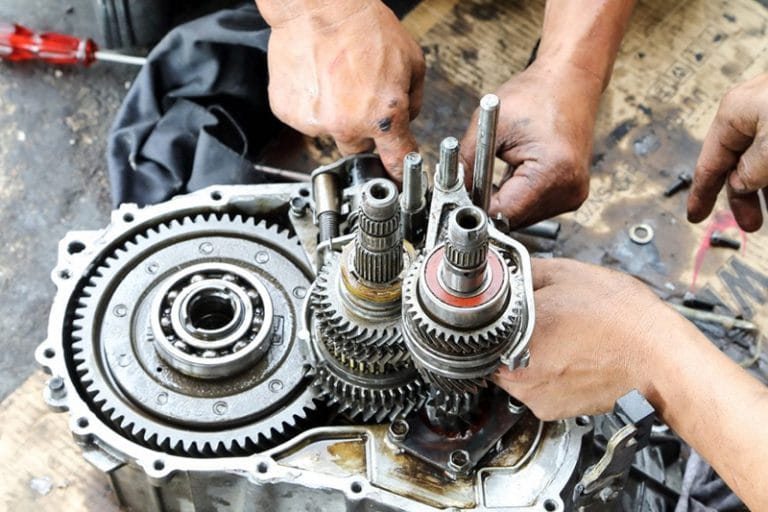
Here’s what makes transmissions so complex: they’re made up of hundreds of small, precision-engineered parts working together. Gears, clutches, bands, valves, sensors, and a whole lot of specialized fluid all have to function in perfect harmony. When everything’s working right, you don’t notice your transmission at all. But when even one component starts to fail, you’ll feel it immediately in how your vehicle drives.
Both automatic and manual transmissions need regular attention, though the maintenance schedules differ slightly. Manual transmissions typically need service around every 30,000 miles (less if you’re towing regularly). Automatics have their own requirements based on your driving habits and manufacturer recommendations.
The bottom line? Your transmission is one of the most sophisticated systems in your vehicle. Treat it that way.
The True Cost of Transmission Repairs and Replacements
Let’s talk numbers, because this is where transmission maintenance really proves its value.
A complete transmission replacement can run anywhere from ,000 to ,000 or more, depending on your vehicle make and model. A transmission rebuild typically costs between ,500 and ,500. Even smaller repairs, like replacing a torque converter or fixing a fluid leak, can easily hit $500 to $1,500.
Compare that to regular maintenance. A transmission fluid change usually costs between and 0. A complete flush with filter replacement might run $150 to $300. That’s a fraction of what you’d pay for emergency repairs.
The real kicker? Most major transmission problems don’t happen overnight. They build up slowly over months or even years of neglected maintenance. Old, contaminated fluid stops protecting internal components. Metal shavings accumulate. Seals dry out and start leaking. By the time you notice something’s wrong, the damage is often extensive.
We see this pattern all the time at our shop. Vehicles that come in for regular maintenance rarely need major transmission work. Vehicles that only show up when something breaks? Those are the ones facing the big repair bills.
Repair Costs vs. Replacement Costs
Here’s a rough breakdown of what you might be looking at:
- Routine fluid change: $80–$200
- Complete transmission flush: $150–$300
- Minor leak repair: $150–$400
- Solenoid replacement: $300–$850
- Torque converter replacement: $600–$1,500
- Transmission rebuild: $2,500–$4,500
- Full transmission replacement: $3,000–$7,000+
The math speaks for itself. Spending a few hundred dollars every 30,000 to 60,000 miles on maintenance is far cheaper than facing a multi-thousand dollar repair down the road. And here’s something else to consider: transmission problems don’t just cost money. They cost time. Your vehicle could be in the shop for days or even weeks during a major repair, leaving you scrambling for transportation.
Prevention really is the cheapest option.
Essential Transmission Maintenance Services
So what does transmission maintenance actually involve? It’s more than just checking a dipstick occasionally. Here’s what keeps your transmission healthy and functioning properly.
Fluid Changes and Inspections
Transmission fluid is the lifeblood of your transmission system. It lubricates moving parts, cools the transmission, and helps transmit power from the engine to the wheels. Over time, this fluid breaks down. It gets contaminated with metal particles, clutch material, and other debris. When that happens, it stops doing its job effectively.
Fresh transmission fluid is typically a bright red color with a slightly sweet smell. If your fluid looks dark, smells burnt, or has visible particles floating in it, that’s a sign it’s overdue for a change. Old fluid can cause:
- Rough or delayed shifting
- Reduced acceleration response
- Overheating
- Increased wear on internal components
During a fluid change, we drain the old fluid, inspect what comes out (looking for signs of internal wear), and refill with fresh fluid that meets your vehicle’s specifications. It’s a relatively simple service that makes a huge difference in how your transmission performs and how long it lasts.
Filter Replacements and Flushes
Your transmission has a filter that catches debris before it can circulate through the system. Like any filter, it gets clogged over time and needs replacement. A dirty filter restricts fluid flow, which can cause shifting problems and accelerate wear.
A transmission flush goes a step further than a standard fluid change. While a fluid change only removes about 40-50% of the old fluid (the rest stays in the torque converter and cooler lines), a flush removes virtually all of it. This is especially useful if you’ve gone too long between services and your fluid is heavily contaminated.
We also inspect the transmission pan during service. This involves:
- Draining the pan and checking for metal shavings or debris
- Inspecting the pan gasket for cracks or wear
- Replacing the filter
- Refilling with fresh, manufacturer-approved fluid
These services might seem minor, but they’re the foundation of transmission longevity.
Warning Signs Your Transmission Needs Attention
Your vehicle usually gives you warning signs before a transmission problem becomes serious. Knowing what to look for can help you catch issues early, when they’re still affordable to fix.
Difficulty shifting gears: If your automatic transmission hesitates, jerks, or refuses to shift smoothly, something’s not right. Manual transmission owners might notice the gear stick feeling stiff or grinding when you shift.
Slipping gears: Your transmission should stay in the gear it’s supposed to be in until conditions change. If your car suddenly shifts on its own, loses power momentarily, or feels like it’s in neutral when it should be in gear, that’s slipping. This is a serious symptom that needs immediate attention.
Strange noises: Whining, humming, clunking, or buzzing sounds coming from your transmission area aren’t normal. These often indicate low fluid levels, worn bearings, or damaged gears.
Fluid leaks: Transmission fluid is typically bright red and has a distinct smell. If you notice red fluid under your car, particularly toward the middle or front, you likely have a leak. Your transmission is a closed system, so it should never lose fluid on its own.
Burning smell: Overheated transmission fluid has a distinct burnt odor. If you smell this, your transmission is running too hot, usually because the fluid is old or the level is low.
Check engine light: Modern vehicles monitor transmission performance through sensors. A check engine light can indicate transmission issues, even if you haven’t noticed other symptoms yet.
If you’re experiencing any of these warning signs, don’t wait. At Key Transmission and Gears, we offer free electronic diagnostics and road testing to help pinpoint exactly what’s going on. The sooner you address a problem, the less it’s likely to cost you.
How Regular Maintenance Extends Transmission Lifespan
A well-maintained transmission can last 200,000 miles or more. A neglected one might fail before you hit 100,000. The difference comes down to one thing: consistent care.
Here’s how regular maintenance protects your transmission:
Prevents overheating: Fresh fluid dissipates heat more effectively than old, degraded fluid. Overheating is one of the leading causes of transmission failure. Clean fluid keeps temperatures in check.
Reduces friction and wear: Transmission fluid lubricates all those moving parts we talked about earlier. When the fluid breaks down, lubrication decreases and metal-on-metal contact increases. That accelerates wear dramatically.
Catches problems early: Regular service appointments give technicians a chance to spot issues before they become catastrophic. A small leak or minor wear pattern is much easier (and cheaper) to address than a failed component.
Protects seals and gaskets: Old fluid can cause seals to dry out, shrink, or crack. Fresh fluid contains additives that keep seals pliable and functioning properly.
Maintains shift quality: Ever driven an older car with a transmission that clunks into gear or hesitates between shifts? That’s often the result of years of neglected maintenance. Regular service keeps your shifts smooth and responsive.
There’s also the resale value to consider. A vehicle with documented transmission maintenance history is worth more than one without. Buyers know that a cared-for transmission is less likely to cause expensive problems down the road.
We work on both foreign and domestic vehicles, all makes and models. Whether you’re driving a daily commuter or a work truck that tows heavy loads, we can help you establish a maintenance routine that fits your vehicle and driving habits.
Creating a Transmission Maintenance Schedule
Every vehicle is different, but here are some general guidelines to help you stay on track:
Check your owner’s manual first: Your vehicle manufacturer provides specific recommendations for transmission service intervals. This is always your best starting point.
General rules of thumb:
- Manual transmissions: Service every 30,000 to 60,000 miles
- Automatic transmissions: Service every 30,000 to 100,000 miles (varies widely by make and model)
- Tow vehicles and heavy-use vehicles: More frequent service, often at half the normal interval
Factors that require more frequent service:
- Regular towing or hauling heavy loads
- Stop-and-go city driving
- Driving in extreme temperatures (hot or cold)
- Mountainous terrain (hello, Colorado.)
- Older vehicles with higher mileage
What to include in your maintenance routine:
- Transmission fluid level checks (monthly or with every oil change)
- Fluid condition inspection (look for color changes or burnt smell)
- Complete fluid change at recommended intervals
- Filter replacement as needed
- Full system flush periodically for high-mileage vehicles
Keeping records of your maintenance is important too. Document every service with the date, mileage, and what was done. This helps you track when your next service is due and provides valuable history if you ever sell the vehicle.
If you’ve put on more than 30,000 miles since your last transmission service, or you can’t remember when it was last done, it’s time to schedule an appointment. Don’t wait for problems to appear.
Conclusion
Transmission maintenance isn’t glamorous, but it’s one of the smartest investments you can make in your vehicle. A few hundred dollars spent on regular service can easily save you thousands in avoided repairs. More importantly, it keeps your car running reliably so you’re not stranded on Arapahoe Road wondering how you’re going to get to work.
The formula is simple: fresh fluid, clean filters, and regular inspections add up to a transmission that lasts. Neglect adds up to expensive surprises.
At Key Transmission and Gears, our team takes pride in the work we do and the competitive prices we offer. We service manual and automatic transmissions on all makes and models, both foreign and domestic. Plus, our repairs come with a 12-month or 12,000-mile warranty, so you can feel confident in the work we do.
If something doesn’t feel right with your vehicle, or if you’re overdue for transmission maintenance, don’t wait for a small problem to turn into a costly repair. We offer free electronic diagnostics and road testing to help identify issues early. Give us a call or stop by our shop serving Englewood, Denver, and Centennial. We’ll explain exactly what your vehicle needs and provide a fair, competitive estimate.
Your transmission works hard for you. Let us help you take care of it.
Frequently Asked Questions
How much does transmission maintenance cost compared to repairs?
Routine transmission maintenance typically costs $80–$300, including fluid changes and flushes. In contrast, transmission repairs range from $500–$1,500 for minor fixes, while rebuilds cost $2,500–$4,500 and full replacements can exceed $7,000. Regular maintenance saves thousands over your vehicle’s lifetime.
What are the warning signs that my transmission needs service?
Common warning signs include difficulty shifting gears, slipping gears, strange noises like whining or clunking, red fluid leaks under your car, a burning smell, and an illuminated check engine light. Addressing these symptoms early can prevent costly transmission repairs.
How often should I change my transmission fluid?
Manual transmissions typically need service every 30,000–60,000 miles, while automatics require service every 30,000–100,000 miles depending on the make and model. Vehicles used for towing, stop-and-go driving, or mountainous terrain need more frequent transmission maintenance.
Can regular transmission maintenance extend my vehicle’s lifespan?
Yes, a well-maintained transmission can last 200,000 miles or more, while neglected ones may fail before 100,000 miles. Regular fluid changes prevent overheating, reduce friction, protect seals, and catch problems early—saving you thousands in potential repair costs.
What is the difference between a transmission fluid change and a flush?
A standard fluid change removes about 40–50% of old fluid, while a transmission flush removes virtually all contaminated fluid from the system. Flushes are especially beneficial for vehicles that have gone too long between services or have heavily contaminated fluid.
Why is transmission fluid important for my vehicle?
Transmission fluid lubricates moving parts, cools the transmission, and helps transmit power from the engine to the wheels. When fluid breaks down or becomes contaminated, it causes rough shifting, overheating, and accelerated wear on internal components—leading to expensive repairs.