
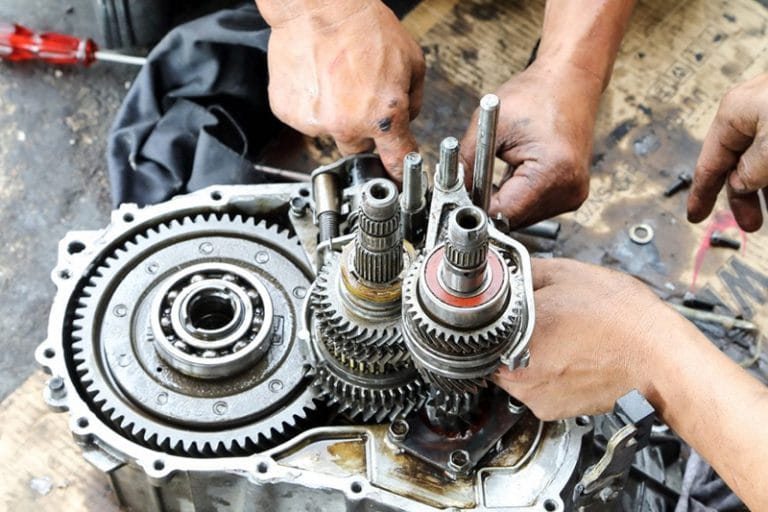
Your vehicle’s transmission is one of its hardest-working components, and when something goes wrong, you’ll usually know it. The question is whether you recognize the warning signs early enough to prevent a small issue from becoming a costly repair. Whether you drive an automatic or manual transmission, certain symptoms should never be ignored.
At Key Transmission and Gears in Englewood, we’ve seen it all, from minor fluid leaks to complete transmission failures. Our ASE-certified technicians help drivers across the Denver metro area diagnose and repair transmission problems before they leave anyone stranded. In this guide, we’ll walk you through the most common signs that your transmission needs professional attention.
Strange Noises Coming From Your Transmission
Your transmission shouldn’t make much noise at all during normal operation. So when you start hearing something unusual, pay attention, it’s often the first warning sign that something’s off.
Grinding or scraping sounds are particularly concerning. Whether you’re actively shifting gears or cruising at a consistent speed, these noises could indicate worn synchronizers, damaged bearings, or low transmission fluid levels. In manual transmissions, grinding during shifts often points to clutch issues or worn gear teeth. Automatic transmissions may produce whining, humming, or buzzing sounds when internal components start to fail.
Clunking and thudding noises deserve immediate attention too. These sounds typically occur during gear changes and suggest the transmission is struggling to engage properly. You might also notice intense vibrations accompanying these sounds.
Here’s what different noises might indicate:
- Grinding: Worn gears or synchronizers, low fluid
- Whining/Humming: Bearing wear, fluid problems, torque converter issues
- Clunking: Damaged mounts, internal component failure
- Buzzing: Low fluid pressure, worn pump
If you’re hearing any of these sounds, don’t wait. Strange transmission noises rarely improve on their own, and catching problems early can save you from more extensive transmission repair down the road.
Slipping Gears and Delayed Engagement
Few things are more unsettling than your transmission suddenly deciding to change gears on its own, or refusing to engage when you need it to. Gear slipping is a serious safety concern and a clear sign your transmission needs professional evaluation.
In an automatic transmission, you can typically feel and hear when the vehicle changes gears. But if your gears are changing unexpectedly, even on flat roads at constant speeds, something’s wrong internally. The transmission might momentarily lose power, cause the engine to rev higher than normal, or produce a jerking sensation.
Delayed engagement is another red flag. If you shift from “park” to “drive” and there’s a noticeable lag before the car actually moves forward, your transmission is struggling. High engine revving without corresponding movement often accompanies this symptom.
For manual transmission drivers, clutch slipping presents similar problems. You might notice:
- Engine revs increasing without acceleration
- Difficulty staying in gear
- Having to press harder to engage the clutch
- Struggles on hills, requiring frequent downshifting
- A loose, vibrating, or spongy clutch pedal
These symptoms often stem from worn clutch plates, hydraulic problems, or internal transmission damage. At Key Transmission and Gears, we always explore clutch repair options before recommending replacement, and we offer competitive prices when replacement becomes necessary.
Leaking Transmission Fluid
Your transmission is a closed system, it’s designed to never leak. That’s exactly why transmission fluid is dyed red: so you can spot leaks easily and address them quickly.
If you notice red fluid pooling under your vehicle, especially near the front or center, you likely have a transmission leak. Common causes include worn pan gaskets, damaged seals, loose drain plugs, or cracks in the transmission housing. Even a small leak can lead to big problems if fluid levels drop too low.
Transmission fluid serves multiple critical functions. It lubricates moving parts, cools the transmission, and provides the hydraulic pressure needed for gear changes. When fluid runs low, metal components grind against each other, heat builds up rapidly, and your transmission can suffer permanent damage.
Regular maintenance helps prevent leaks and extends transmission life. We recommend:
- Periodically inspecting all components and topping off fluids
- Replacing the drain pan gasket, filter, and adding fresh fluid at recommended intervals
- Flushing the transmission to drain all fluid and clean out accumulated sludge
- Checking the pan gasket for cracks and replacing if needed
Never ignore a transmission fluid leak. What starts as a minor repair can quickly escalate into a full rebuild or replacement if left unaddressed. If you spot red fluid under your car, schedule an appointment for transmission repair in Englewood right away.
Burning Smell or Overheating Transmission
Cars don’t exactly smell great, but a sudden burning odor should never be ignored, especially if it’s coming from your transmission area. That acrid, burnt smell often indicates transmission fluid is overheating or burning off, and you’re on your way to major damage.
Transmission fluid that’s running too hot breaks down quickly, losing its ability to lubricate and cool internal components. Fresh transmission fluid is typically bright red with a slightly sweet smell. When it degrades, it turns darker (brown or even black) and develops that distinctive burnt odor.
Several factors can cause transmission overheating:
- Low fluid levels from leaks or neglected maintenance
- Old, degraded fluid that no longer dissipates heat effectively
- Heavy towing or hauling beyond your vehicle’s capacity
- Stop-and-go traffic in hot weather
- Malfunctioning cooling system components
An overheating transmission doesn’t just smell bad, it can warp metal components, damage seals, and cause complete transmission failure. If you notice a burning smell while driving, pull over safely and let the vehicle cool down. Check your fluid levels if you can, but regardless, get to a transmission repair shop soon.
We work on both manual and automatic transmissions at Key Transmission and Gears, handling everything from routine fluid changes to complete transmission flushes that remove sludge and restore proper operation.
Dashboard Warning Lights and Error Codes
Modern vehicles are equipped with sophisticated computer systems that monitor transmission performance continuously. When something goes wrong, your dashboard will usually let you know, often before you notice any other symptoms.
The check engine light or dedicated transmission warning light illuminating is your vehicle’s way of saying “pay attention.” While a check engine light can indicate dozens of different issues, transmission-related error codes are among the most common triggers.
Common transmission-related warning codes include:
- Solenoid malfunctions
- Fluid temperature problems
- Gear ratio errors
- Input/output speed sensor issues
- Torque converter problems
The tricky part? You can’t read these codes without proper diagnostic equipment. That’s where professional help becomes essential. At our Englewood shop, we offer free electronic diagnostics and road testing to pinpoint exactly what’s triggering those warning lights.
Don’t make the mistake of ignoring dashboard warnings or simply disconnecting the battery to “reset” the light. The underlying problem remains, and continuing to drive can cause additional damage. Once we identify the issue through our computer diagnostics, we provide a complete explanation and competitively priced repair estimate.
Our diagnostic capabilities extend beyond transmissions to include transfer cases, differentials, axles, and complete drivetrain evaluation, everything you need to get back on the road safely.
When to Seek Professional Transmission Repair in Englewood
Knowing when to bring your vehicle in can save you both money and headaches. The general rule is simple: if something doesn’t feel right, it probably isn’t.
Seek professional transmission repair immediately if you experience:
- Any of the warning signs described above
- Rough, bumpy, or shaky ride quality
- Difficulty accelerating even though high engine revs
- Cupped or uneven tire wear (which could indicate differential or suspension issues too)
- Excessive bouncing over bumps or feeling out of control
- Drifting, swaying, or leaning during turns
At Key Transmission & Gears, our family-owned shop has served Englewood and the greater Denver metro area for years. We specialize in both automatic transmission repair and manual transmission repair, working on foreign and domestic vehicles of every make and model. Our ASE-certified mechanics handle everything from factory-scheduled maintenance to complete rebuilds and replacements.
Beyond transmissions, we also provide differential repairs and suspension repairs, two services critical for smooth rides and safe handling. Our expertise extends to clutches, transfer cases, axles, 4×4 locking hubs, wheel bearings, and timing belts.
We take pride in our work and the competitive prices we offer. Plus, our repairs come with a 12-month or 12,000-mile warranty. Don’t wait for a small problem to turn into a complex and costly transmission repair. If you suspect any issues with your transmission, clutch, or differential, give us a call or visit our Englewood location.
Conclusion
Transmission problems won’t fix themselves, and waiting almost always makes repairs more expensive. Whether you’re hearing strange noises, noticing fluid leaks, experiencing gear slippage, or seeing warning lights, these symptoms demand prompt attention.
If you notice any of these common issues, contact Key Transmission and Gears in Englewood for an expert diagnosis and fast repairs. Our experienced team will identify the problem, explain your options clearly, and get your vehicle back on the road safely. Schedule your appointment today.