
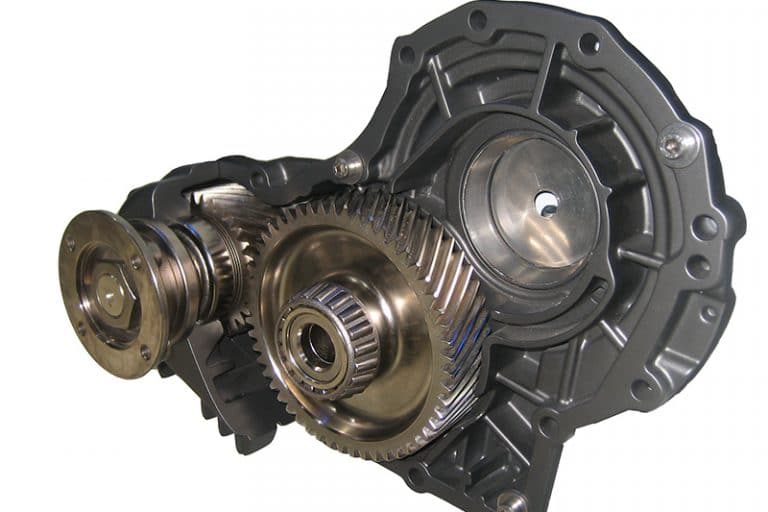
Your transmission is one of the hardest-working components in your vehicle, and one of the most expensive to replace. We’ve seen it time and again: drivers skip routine maintenance, ignore early warning signs, and end up facing repair bills that could have been avoided with a little preventive care. The truth is, transmission maintenance isn’t just about keeping your car running smoothly today. It’s about protecting your wallet from catastrophic expenses down the road. In this guide, we’ll walk you through exactly why staying on top of transmission care matters, what services you actually need, and how to recognize when something’s wrong before it becomes a major problem.
What Your Transmission Actually Does and Why It Matters
Think of your transmission as the middleman between your engine and your wheels. It takes the power your engine generates and converts it into the torque that actually moves your vehicle. Without it, your car isn’t going anywhere.
In an automatic transmission, this process happens seamlessly, gears shift on their own based on speed and load. Manual transmissions put you in control, requiring you to engage the clutch and select gears yourself. Either way, we’re talking about a complex system of gears, clutches, synchronizers, torque converters, and hydraulic components all working together in precise harmony.
Here’s why this matters for your bank account: transmission systems operate under extreme heat and pressure. Over time, transmission fluid breaks down, contaminants build up, and components wear out. When one part fails, it often takes others with it. A $150 fluid change suddenly looks pretty reasonable compared to a $4,000+ transmission rebuild.
At Key Transmission & Gears in Englewood, we work on both manual and automatic transmissions across all makes and models, foreign and domestic. We see firsthand how proper maintenance extends transmission life by years, while neglect leads to premature failure.
The True Cost of Neglecting Transmission Care
Let’s talk numbers, because this is where transmission maintenance really proves its value.
A complete transmission replacement typically runs between ,500 and ,000 for most vehicles. Luxury brands and trucks can push that figure even higher, sometimes exceeding $10,000 when you factor in labor. A transmission rebuild, while less expensive than a full replacement, still costs anywhere from $2,500 to $4,500.
Now compare that to preventive maintenance. A transmission fluid change usually costs between 0 and 0. A complete flush with filter replacement might run $200 to $400. Even if you’re religious about maintenance and service your transmission every 30,000 miles, you’re looking at maybe ,000 to ,500 over 100,000 miles of driving.
The math is pretty simple: spend a little consistently, or pay a lot all at once.
But the costs don’t stop at repairs. A failing transmission affects fuel economy, potentially costing you hundreds extra at the pump. There’s the inconvenience of being stranded when your transmission finally gives out. And let’s not forget the hit to your vehicle’s resale value, buyers can spot transmission problems, and they’ll walk away or lowball you accordingly.
We’ve had customers come into our Englewood shop thinking they needed a minor adjustment, only to discover that years of skipped maintenance had caused irreversible damage. That’s a conversation nobody wants to have.
Essential Transmission Maintenance Services Every Driver Needs
Not all transmission maintenance is created equal. Here’s what actually keeps your transmission healthy and what we recommend for drivers who want to maximize their vehicle’s lifespan.
Fluid Changes and Inspections
Transmission fluid is the lifeblood of your system. It lubricates moving parts, cools components, and enables smooth gear changes. Over time, this fluid degrades, it loses its protective properties, becomes contaminated with metal particles, and can even turn into a sludgy mess that causes more harm than good.
At Key Transmission & Gears, we offer several levels of fluid service:
- Periodic inspections and fluid top-offs – Sometimes you just need a quick check to make sure levels are correct and the fluid looks healthy.
- Drain and refill with filter replacement – This removes the old fluid from the pan, replaces the filter, and adds fresh fluid. It’s the standard maintenance most vehicles need.
- Complete transmission flush – This drains all fluid from the system and cleans out accumulated sludge. It’s more thorough than a simple drain and refill.
- Pan gasket inspection and replacement – We remove the pan gasket, check for cracks or wear, and replace it if needed to prevent leaks.
Your transmission is a closed system, meaning it should never leak. Transmission fluid is typically red, making leaks easy to spot on your driveway. If you see any red fluid under your vehicle, that’s your cue to come in for an inspection.
Beyond fluid services, we also handle mileage-based maintenance for differentials (gear oil changes every 30,000 to 60,000 miles), clutch inspections for manual transmissions, and checks on related components like axles, driveshafts, and transfer cases.
Warning Signs That Your Transmission Needs Attention
Your transmission usually gives you fair warning before it fails completely. The key is knowing what to listen and feel for, and not ignoring the signs when they appear.
Grinding or unusual noises – Whether you’re shifting or cruising at a steady speed, grinding, scraping, or whining sounds aren’t normal. In manual transmissions, grinding often indicates worn synchronizers. In automatics, it could point to failing bearings or damaged gears.
Gears changing unnecessarily – In an automatic, you can typically feel and hear gear changes. If your transmission is shifting randomly on flat roads or at constant speeds, something’s wrong with the internal electronics or hydraulics.
Lack of response – Put your car in drive and… nothing happens immediately? That delayed engagement, especially when accompanied by high engine revving without actual movement, is a classic transmission red flag.
Loud or rough gear changes – Clunking, thudding, jerking, or intense vibrations during shifts indicate your transmission is struggling. Poor acceleration even though a revving engine falls into this category too.
Fluid leaks – As we mentioned, any red fluid under your car warrants immediate attention. Leaks can drain your transmission quickly, leading to overheating and component failure.
Declining gas mileage – A struggling transmission makes your engine work harder, which burns more fuel. If your MPG suddenly tanks without explanation, transmission problems could be the culprit.
If you notice any of these symptoms, don’t wait. At Key Transmission & Gears, we offer free electronic diagnostics and road testing to pinpoint issues before they escalate. Early intervention almost always saves money.
How Often Should You Service Your Transmission?
The honest answer? It depends on your vehicle, your driving habits, and what your owner’s manual recommends.
That said, here are some general guidelines we share with customers:
For manual transmissions, fluid changes are typically recommended around every 30,000 miles. If you tow frequently, drive in stop-and-go traffic, or put your vehicle through demanding conditions, you’ll want to service it more often, possibly every 15,000 to 20,000 miles.
For automatic transmissions, the interval varies more widely. Some manufacturers suggest 60,000 to 100,000 miles, while others recommend 30,000 miles. We lean toward the more conservative end, especially for vehicles with higher mileage or those used for towing.
Differentials need attention too. Plan on gear oil changes every 30,000 to 60,000 miles. This service is nearly as important as engine oil changes, skipping it leads to premature wear and potentially expensive repairs.
Here’s our practical advice: if you’ve put on more miles since your last transmission service than you can comfortably remember, it’s probably time to come in. Check your owner’s manual for the manufacturer’s recommendations, but don’t assume those intervals are absolute maximums. Conditions vary, and erring on the side of caution costs far less than erring on the side of neglect.
We work on all-wheel, front-wheel, rear-wheel, and 4-wheel drive vehicles. Whatever you’re driving, our ASE-certified technicians can help you establish a maintenance schedule that makes sense for your specific situation.
Comparing Maintenance Costs vs. Replacement Costs
Let’s break this down with a real-world comparison.
| Service | Typical Cost | Frequency |
|---|---|---|
| Transmission fluid change | $100–$250 | Every 30,000–60,000 miles |
| Complete flush with filter | $200–$400 | Every 60,000–100,000 miles |
| Differential service | $75–$150 | Every 30,000–60,000 miles |
| Transmission rebuild | $2,500–$4,500 | When major failure occurs |
| Transmission replacement | $3,500–$7,000+ | When rebuild isn’t viable |
Over 150,000 miles of driving, a driver who stays on top of maintenance might spend $1,500 to $2,500 total on transmission-related services. A driver who ignores maintenance and ends up needing a replacement? Easily $5,000 or more, often at the worst possible time.
And there’s another factor to consider: repairs caught early are almost always cheaper than repairs caught late. A minor leak addressed promptly might cost $200 to fix. That same leak ignored until it causes internal damage? Now you’re looking at thousands.
At Key Transmission & Gears, we provide competitively priced estimates and won’t recommend services you don’t actually need. Plus, our repairs come with a 12-month or 12,000-mile warranty, giving you peace of mind that the work is done right.
Conclusion
Transmission maintenance isn’t glamorous, but it’s one of the smartest investments you can make in your vehicle. The math is straightforward: a few hundred dollars in preventive care beats several thousand in emergency repairs every time.
If it’s been a while since your last service, or if something doesn’t feel quite right, don’t wait for a small problem to become a costly one. Give our team at Key Transmission & Gears in Englewood a call. We serve the entire Denver metro area and we’re here to keep your transmission running smoothly for years to come.
Recent Comments