
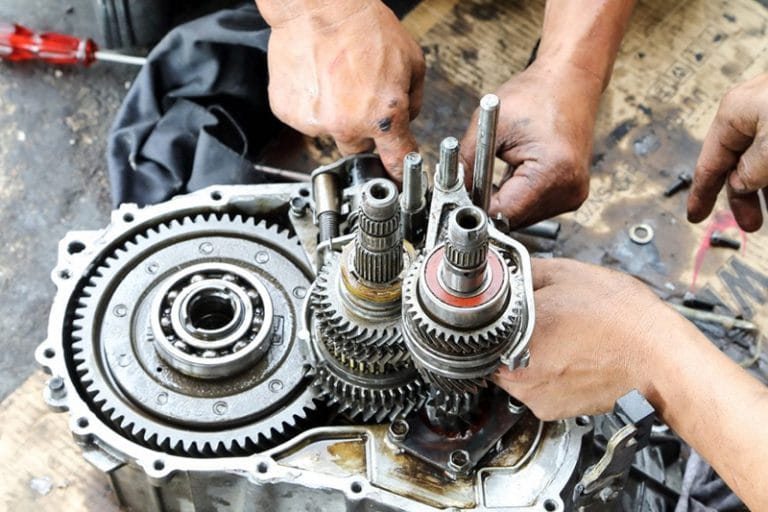
If your vehicle is slipping, shuddering, or refusing to go into gear, you’re probably asking the big question: automatic transmission rebuild or replace, what’s better? We help drivers across Englewood, Denver, and Centennial make this call every week. At Key Transmission and Gears, our ASE-trained techs handle everything from factory maintenance to full rebuilds and replacements, and we’ll walk you through which route gives you the best value and reliability for your situation.
Key Takeaways
- If you notice slipping, shuddering, delayed engagement, or leaks, get diagnostics and a road test before deciding on an automatic transmission rebuild or replace.
- Choose a rebuild when the case and hard parts are sound, damage is moderate, and you want a cost-effective fix that keeps the original unit.
- Opt for replacement if there’s severe internal damage, very high mileage, a need for fast turnaround, or you want the predictability of a reman warranty and like-new reliability.
- Plan for rebuilds to run about $3,500–$7,500 in 3–5 days with 12–24 months of coverage, while replacements typically cost $3,500–$10,000 in 1–3 days and often include longer warranties.
- CVTs and many DCTs often favor quality reman replacement, while rare or hard-to-source units may require a rebuild; high-mileage vehicles usually benefit from replacement.
- Pick a transparent shop that provides written estimates and warranties, uses correct fluids and updated parts, flushes coolers, and keep up with fluid service to delay major transmission work.
How Automatic Transmissions Fail
Modern automatics are incredible pieces of engineering, but they live a hard life. Heat, fluid contamination, and worn internal parts lead to weak shifts and, eventually, failure. Here in the Front Range, frequent stop-and-go traffic and mountain towing add stress, especially if fluid service gets skipped.
Common Symptoms
- Slipping or flare between gears
- Delayed engagement when shifting from park to drive or reverse
- Harsh or jerky shifts, shudder on acceleration
- Whining, clunking, or grinding noises
- Red fluid on the driveway or a burnt-fluid smell
- Check engine or transmission warning light
If any of this sounds familiar, bring it in. At Key Transmission and Gears, we offer free electronic diagnostics and road testing, so we can pinpoint the issue before it grows.
Typical Root Causes
- Low, wrong, or dirty transmission fluid
- Overheating from heavy loads or clogged coolers
- Worn clutch packs, bands, seals, and bushings
- Faulty solenoids, valve body wear, or sensor failures
- Mechanical damage after long neglect or repeated overheating
Rebuild Vs. Replace At A Glance
Both paths can get you back on the road. Choosing between an automatic transmission rebuild or replace comes down to damage, budget, timeline, and long-term plans.
- Rebuild: Restores your existing unit with new wear parts and any hard-part replacements needed. Good for moderate damage and keeping the original transmission with the vehicle.
- Replace: Installs a new, remanufactured, or used unit. Often faster and more predictable when there’s extensive damage.
What A Rebuild Includes
- Complete teardown and inspection
- Cleaning and measurement of all components
- Replacement of clutches, steels, bands, seals, gaskets, and filters
- Valve body service or replacement as needed
- Updated components if applicable for known issues
- Reassembly, bench testing, reinstall, and fresh fluid
At Key Transmission and Gears, we rebuild in-house for many makes and models, foreign and domestic, which can save time and give you direct access to the techs doing the work.
What Replacement Options Mean (New, Remanufactured, Used)
- New OEM: Best reliability, highest cost, limited availability for older vehicles.
- Remanufactured: Factory-level overhaul with updates and testing. Strong warranty, good balance of cost and reliability.
- Used: Salvage-yard unit with unknown history. Lowest upfront cost, highest risk. We usually reserve this option for budget-restricted or short-term ownership cases.
Cost, Time, And Warranty Comparison
Costs vary widely by vehicle, parts availability, and the extent of the damage. We’ll always provide a clear, competitively priced estimate before we touch a bolt.
Typical Price Ranges
- Rebuild: $3,500–$7,500 for most vehicles
- Replace: $3,500–$10,000 depending on whether it’s remanufactured or new, and on make/model
These are ballpark figures. Performance vehicles, European makes, and newer 8–10 speed units tend to be on the higher end.
Downtime And Availability
- Rebuild: Typically 3–5 business days, depending on parts and the condition of hard parts
- Replacement: 1–3 business days if the unit is in stock: longer if we’re waiting on a specific reman or new OEM unit
Warranty And Reliability Expectations
- Quality rebuilds usually carry 12–24 months of coverage. At Key Transmission and Gears, many repairs come with a 12-month or 12,000-mile warranty, and we’ll walk you through extended options where available.
- Remanufactured replacements often include longer warranties from the remanufacturer, sometimes up to 36 months.
We’ll explain coverage in plain English, so you know exactly what’s included.
Which Option Is Better For Your Situation?
There isn’t a one-size answer. We look at the transmission’s condition, vehicle mileage, how you use the car, and how long you plan to keep it.
When A Rebuild Makes Sense
- The case and major hard parts are still structurally sound
- Moderate wear or isolated failures like worn clutches or a serviceable valve body
- You want to preserve the original unit for a classic or rare vehicle
- Budget-conscious repair with good longevity expectations
When Replacement Is The Smarter Call
- Severe internal damage, metal throughout the unit, or cracked case
- Repeated failures or very high mileage where many components are near end-of-life
- You need the fastest turnaround and the predictability of a reman warranty
- You plan to keep the vehicle long term and want like-new reliability
Special Cases: CVT, DCT, High Mileage, And Rare Vehicles
- CVT: Many CVTs don’t respond well to partial repairs. Replacement with a quality reman is often the safer bet.
- DCT: Dual-clutch units can have mechatronic issues that tip the scale toward replacement.
- High mileage: Over 150k–200k, a replacement may offer better long-term value.
- Rare or older vehicles: Rebuild can be the only realistic path if replacements are hard to source.
Not sure where your situation lands? Bring it by Key Transmission and Gears in Englewood for free electronic diagnostics and a road test. We’ll show you exactly what we find and why we recommend rebuild or replacement.
How To Choose A Shop And Avoid Costly Mistakes
Your transmission is one of the most complex systems on your vehicle. The right shop will save you money and frustration.
Questions To Ask Before You Commit
- What’s included in the rebuild or replacement process?
- Will you provide a written estimate and a written warranty?
- Are you using OEM, reman, or high-quality aftermarket parts?
- Do you road test and scan the vehicle before and after?
- How do you handle cooler flushing and contamination clean-up?
Red Flags To Watch For
- Vague or too-good-to-be-true pricing
- No warranty or a warranty with confusing exclusions
- Pressure to decide immediately without diagnostics
- No explanation of parts used or fluid type
Parts And Fluids That Matter
- Correct fluid is critical. Using the wrong spec can ruin a good transmission.
- Updated parts and known fixes should be included when applicable.
- Cooler and lines must be flushed or replaced to prevent re-contamination.
We handle all makes and models, foreign and domestic, and we’ll happily show you the old parts and explain the repair in plain terms. That transparency is a big reason local drivers trust Key Transmission and Gears.
Maintenance To Delay Or Avoid Major Transmission Work
A little maintenance goes a long way, especially with Colorado traffic and elevation changes.
- Follow mileage-based service intervals in your owner’s manual
- Fluid services: drain and fill, filter and gasket replacement, and full transmission flushes when appropriate
- Fix leaks early: transmission systems shouldn’t consume fluid
- Keep the cooling system healthy: heat kills transmissions
- Avoid towing beyond your vehicle’s rating and use tow/haul mode when equipped
We provide all scheduled transmission maintenance, including fluid changes, complete flushes, and filter and gasket replacements. Catch issues early and you might avoid a costly overhaul.
Conclusion
So, automatic transmission rebuild or replace: what’s better? If the damage is moderate and the core is healthy, a rebuild can be a smart, cost-effective fix. If the unit is heavily damaged, very high mileage, or you want the predictability of a reman warranty, replacement often wins.
If you’re in Englewood, Denver, or Centennial and your transmission isn’t acting right, we’re ready to help. Stop by or call Key Transmission and Gears for free electronic diagnostics and a road test. We’ll explain what’s happening, give you a clear estimate, and back the work with solid warranty coverage. Let’s get your car shifting the way it should.
Automatic Transmission Rebuild or Replace: FAQs
What’s better: automatic transmission rebuild or replace?
It depends on damage, mileage, and your plans. A rebuild suits moderate wear when the case and hard parts are sound and you want to keep the original unit. Replacement (usually a reman) is smarter for severe internal damage, very high mileage, faster turnaround, and longer, predictable warranty coverage.
How much does an automatic transmission rebuild or replace cost?
Typical ranges are $3,500–$7,500 for a rebuild and $3,500–$10,000 for replacement (reman vs. new OEM, and make/model). Performance, European, and newer 8–10 speed units trend higher. Actual pricing depends on parts availability and damage. Always request a written, itemized estimate before authorizing work.
How long does a transmission rebuild or replacement take?
A quality rebuild usually takes 3–5 business days, depending on parts and any hard-part issues found during teardown. Replacement can be quicker—often 1–3 business days if the reman or new unit is in stock—but may take longer if a specific unit must be sourced.
What warranty should I expect on a rebuild or replacement?
Quality rebuilds commonly include 12–24 months of coverage. Remanufactured units often carry longer warranties, sometimes up to 36 months, from the remanufacturer. Key Transmission and Gears offers 12-month/12,000-mile coverage on many repairs and can discuss extended options—always get the warranty terms in writing.
Is it safe to keep driving with a slipping or shuddering transmission?
It’s risky. Continued driving can overheat the fluid, accelerate clutch and band wear, and spread metal debris, turning a repairable problem into a full replacement. If the vehicle still moves, drive minimally to a shop; otherwise, tow it to avoid further damage and safety issues.
Will a transmission fluid change or flush fix slipping?
Sometimes. If slipping stems from low, wrong, or degraded fluid, service can help. But worn clutches, bands, or valve body wear won’t be cured by new fluid and could worsen if the wrong spec is used. Get diagnostics first; they guide whether service or an automatic transmission rebuild or replace is needed.